featured-slider

Good nutrition and Vitamins for the eyes

 Good nutrition and vitamins promote the optimal health of the eyes.

Vitamins for the eyes
An unbalanced diet can have serious consequences on eye health, as it increases the risk of developing serious diseases, such as cataracts or macular degeneration. Foods rich in antioxidants and carotenoid pigments help preserve the health and proper functioning of the eyes.

Eye health is closely linked to food, since unbalanced diets affect both the eyes and the muscles and blood vessels that surround them. Several studies have shown that antioxidants can help prevent and delay the appearance of vision problems.

"The fact of eating a proper diet can improve vision by up to 30 percent. The most advisable foods are those that contain vitamins A, E, C, B2 (riboflavin) and lute in. Among the least recommended are red meats, alcohol, sausages and those with high levels of saturated fats, "explains Dr. José Antonio Parejo, ophthalmologist and director of IMQ Vision, Madrid.

The vitamin A, found in dairy products, eggs, fish, liver, helps maintain healthy conjunctiva, a transparent membrane covering the anterior portion of the eyeball, and contributes to the formation of rhodopsin, a sensitive red pigment to the light that is in the retinal canes.

The vitamins C, E and B2, meanwhile, positive effect on the lens, promote the conjunctiva and decrease the risk of cataracts. Among the foods rich in these vitamins are papaya, kiwi, citrus, vegetable oils and nuts.

Finally, lutein seems to be one of the best allies in the prevention of macular degeneration. This substance belongs to the group of carotenoids and is present in spinach and egg yolk.

More protection

Eye health and care
Eye health and care
To protect the eyes, it is not enough to eat a healthy diet. It is important to avoid risk factors, such as “solar radiation, which can be very harmful to ocular tissues. Other factors that undoubtedly affect the health of the eyes are charged environments, smoke, tobacco, excessive heat and cold. It is also detrimental to keep your eyes on a single point, such as the computer screen or TV, for a long time, or work in poor lighting. "

Also, it is advisable to perform eye exercises, since "they strengthen the orbital muscles and delay presbyopia. Also, they help to rest the eyesight and lubricate the eye correctly. "\

Good vitamins for sight:

  1. Calcium: strengthens the sclera.

  2. Vitamins B2, B12 and folic acid: protect the conjunctiva.

  3. Vitamin A: helps maintain the cornea in perfect condition.

  4. Vitamins C, E and B2: are beneficial for the lens.

  5. Chromium: improves the functioning of the ciliary muscle.

  6. Vitamin B complex: enhances the youth of the macula. 


Tips to take care of your eyes in summer

EYE PROTECTION TIPS FOR SUMMER

EYE PROTECTION TIPS
SUMMER EYE PROTECTION TIPS 
In summer, eye problems increase, and in the same way that the skin is protected from solar radiation, special precautions must be taken with the eyes.

Among the main factors that can damage our eyes we highlight: the high environmental luminosity, exposure to sun and chlorine from swimming pools, high temperatures, the dryness of the environment and poor protection when practicing certain sports. Here is a series of basic tips so that you do not lose sight of your wellbeing during the summer:

Protect your eyes from ultraviolet rays 

Protect your eyes from ultraviolet rays
save your eyes from rays of the summer sun
Have you ever had a red and painful sunburn? Well imagine that burn in your corneas. This is what happens if you do not protect your eyes against the strong rays of the summer sun with a good pair of sunglasses. They do not have to be very dark or too expensive. Just make sure that they are approved to block both UVB and UVA rays. UV-blocking contact lenses can also help protect against dangerous UV rays. Although they do not replace sunglasses, they offer complementary protection

Sunglasses

It should be noted that the use of glasses that only have colored crystals, but do not protect against ultraviolet radiation, is more harmful than not wearing sunglasses. This is due to the fact that, when the luminosity decreases, the pupil dilates, being therefore unprotected against ultraviolet radiation and its consequent negative effects on vision.

SUMMER EYE PROTECTION TIPS
Use Sunglasses in summer

 Sport activities

Many of the ophthalmological emergencies in summer are derived from sports without proper eye protection. Such is the case of sports that use small balls such as tennis or paddle, where there is a likelihood of receiving an impact. In the practice of cycling or swimming, the protection of the glasses can prevent the entry of foreign bodies and eye irritation by the chlorination of water, respectively.

Infections

Summer Eye infection tips
Summer Eye infection tips 

Summer is a favorable period for the transmission of eye diseases, whether bacterial or viral, such as conjunctivitis and keratoconjunctivitis. If symptoms such as itching appear, stinging should never rub the eyes as it will cause an increase in inflammation and discomfort, it is best to go to the ophthalmologist. Contact lenses should never be used in the sea or in the pool, as they can be contaminated by water and cause very serious infections in the eye.

Dryness of the environment

It is produced, above all, by heat in areas far from the sea and by prolonged exposure to air conditioning. The dryness causes a greater evaporation of the tear, giving rise to the sensation of dry eye, of foreign body, stinging, heaviness and desire to have the eyes closed. If you suffer these symptoms for a long time, you should see a specialist to prescribe the most appropriate treatment.

Allergies

The decrease in rainfall that occurs in summer increases the number of particles suspended in the air and generates a charged environment capable of causing ocular allergies. It is convenient to use sunglasses to reduce the contact of allergens, put a special filter in the air conditioner, reduce outdoor activities until midmorning and use swimming goggles, since chlorine worsens allergic conjunctivitis.

If you feel irritation, wash your eyes

feel irritation, wash your eyes
Tips to take care of  eyes

There are few creams, sprays and chemicals that can get in your eyes during the summer. Sunscreens are great for the skin but not for the eyes; therefore, choose those that are resistant to water so they do not run with sweat or swimming. Do not forget to wash your hands after applying sunscreen and before touching contact lenses. Poison ivy, oak and sumac produce oils that are very irritating to the eyes and require them to be washed immediately with clean water. Also wash your eyes if they come in contact with chemicals for the pool, insect repellents or water from untreated lakes and reservoirs.


Summer is a great time of the year. Follow these tips of eye protection and enjoy the sun safely.

Do my children have good eye health? Symptoms and warning signs


What Are The Most Common Visual Disorders In Childhood?

Common Visual Disorders In Childhood


Vision disorders in children who present more usually are refractive errors (myopia, hyperopia, astigmatism), amblyopia (lazy eye), strabismus and dyschromatopsia (alterations in color vision).

Alert signals of the lazy eye


The amblyopia or lazy eye affects approximately 2-5% of the population and is one of the most common causes of vision loss in developed countries. We must be vigilant if the child is premature or there is a family history of lazy eyes, refractive errors or retinal disorders. It is important to diagnose it as soon as possible. Although he is generally asymptomatic, his signs include:
      Headache or cervical pain.
      hen the child has learned to read, he jumps words or confuses the letters.

Common Visual Disorders In Childhood


Eye misalignment

The strabismus affects between 3% and 6% of the population. It is necessary to diagnose it as soon as possible, since one of the causes that can trigger it is amblyopia, which can be corrected in children undergoing treatment, while it is incorrigible in adulthood. Some of the signs include:

        Eye misalignment
        The eyes do not move together towards the same direction.
        Inclination of the head to one side to look at specific points.
        The child usually blinks or rubs his eyes.
        The child turns or closes an eye in order to fix the gaze.


Symptoms of refractive disorders

Refractive errors (astigmatism, myopia and hyperopia) affect about 20% of children.

Symptoms of myopia

The Myopia often occurs around 6 years and usually has some of the following symptoms:

        The child opens his eyes to fix the look at a long distance.
        The child confuses people at a more or less distant distance.
        The child prefers activities requiring near vision.
        The child approaches the objects to see them correctly or to read.
        The child is watching TV or the computer very closely.
        The child opens his eyes to fix the eye on an object.

Headaches, eyestrain and inclination of the head backwards

The farsightedness is often physiological, which means it is present in most children at birth. However, it will disappear as the eye develops. However, in some cases it can persist throughout life. If hyperopia is high and is not corrected, it can trigger amblyopia or strabismus.

It can cause signs such as:


        Headaches caused for the effort to perform near vision activities
        Eye fatigue after this kind of activities
        Reddening eyes
        Inclination of the head back
        Aperture of the eyes to fix the gaze
        Strabismus


Other signs of vision problems may be a poor performance of the child at school and lack of attention and concentration, as well as whitish spots in the pupil area, discomfort in the face of the light, reddening of the eyes, bad positions of the head in order to fix the gaze, difficulty in distinguishing the colors ... If any of these symptoms is present, it is imperative to go to the ophthalmologist to perform a complete eye exam. It is also important to consider the need to have all children undergoing an ophthalmic examination at the age of 3 years to detect visual defects.

Natural Method For Removing Dark Circles Quickly


  10 NATURAL TIPS TO REMOVE DARK CIRCLES UNDER THE EYES

EYE DARK CIRCLES PROBLEM
EYE DARK CIRCLES PROBLEM 

Fed up with your dark circles? I have for you 10 100% natural tips to remove dark circles under the eyes that will revolutionize your daily life! Say goodbye to these ugly dark circles once and for all

Often considered as a sign of fatigue, dark circles can be black or purple, with under without pocket under the eyes; they are the result of poor blood circulation. If the lymph responsible for the good drainage of the tissues is out of order, the evacuation of the toxins is not done well, and thus they stagnate. As the skin under the eyes is very thin, it shows all the more.
How to remove dark circles under the eyes? What are the best natural concealer tips? Here is a non-exhaustive list but that will already be able to help you choose the solution that suits you best!

Explains why and how dark circles

If the lymph that drains the tissues does not work properly, the removal of pigments grouped under the skin (which give this color) will not be done properly and you will have dark circles. The skin is 4 times thinner under the eyes than on the rest of the body, which is why we often see the appearance of dark brown or bluish brown circles. The appearance of dark circles can also come from hereditary factors or an unhealthy lifestyle.
Regarding the bags under the eyes, it is an accumulation of water and fat under the eyes. Often due to an unhealthy lifestyle (alcohol, tobacco, lack of sleep, etc.) that can cause water retention. Lymphatic vessels can also be at the root of the problem if they do not work properly.
You will understand it must absolutely drain the liquid that is stagnant under the eyes! That's why all of these tips below will help you.

Concealer essential oils to the rescue

EYE DARK CIRCLES PROBLEM OIL
EYE DARK CIRCLES PROBLEM 

To remove dark circles under the eyes we need essential oils that drain the liquid and toxins accumulated under the eyes.
Do not forget, the use of essential oils requires vegetable oils, here are the vegetable oils recommended in this case:
  • The avocado oil : deeply hydrates the skin (I use it a lot for moisturizing my face)
  • The oily macerate of Carrot : effect good mine assured!
  • Vegetable oil Tamanu : promotes blood circulation , protects the vessels, and is recommended to rehydrate the skin especially in winter.

Essential oils to remove dark circles:

Choose one of these three vegetable oils to use the essential oils below :
In a container mix either all of these essential oils if you have them all, or if not, only one or two of your choice:
  • 1 drop of essential oil of Ciste Ladanifère : Tonifies and regenerates the skin
  • 1 drop of essential oil of Italian Helichrysum (or Immortelle) : decongest the veins
  • 1 drop of Cypress essential oil: circulatory properties, it decongests the veins and stimulates the lymphatic system.
  • 1 drop of Carrot essential oil : eliminates toxins, regenerates and firms the skin. Ideal to look good especially in case of dark circles!

To use morning and evening for at least 4 weeks!

The carrot essential oil is ideal for the skin : it is revitalizing, regenerating, powerful anti-wrinkle skin, skin tonic, healing, desclerosing
Problem skin : rosacea, eczema, acne, boils, age spots, cracks, scars, wrinkles, skins dull
Care regenerating dry, mixed, oily skin, recommended for cellulite and orange peel.

SUPER Blend of essential oils for a radical result 100% natural to remove recalcitrant rings!

In a bottle mix the following ingredients:
  • 20 drops of Lentisque Pistachier essential oil : lymphatic decongestant
  • 20 drops of Red Myrtle essential oil: tonic and astringent cutaneous property.
  • 40 drops of essential oil of Italian Helichrysum: decongestant venous and circulatory (super anti-ring)
  • 80 drops of oily macerate of Carrot: Provitamin A, which will restore radiance to the complexion and give you a good-looking effect

Mix everything and your 100% natural anti-ring is ready! To use morning and evening for at least 4 weeks! Take a break of a week and start again 4 weeks ....

Cold to reactivate blood circulation!

Cold compresses:

Against the swollen skin around the eyes, cold water is perfect, for this it is sufficient to apply compresses of cold water on each eyelid for a few minutes.
The swelling of the eyes will decrease after this application.
 Tip! Add a few drops of rose water with toning and moisturizing properties on each cold pack!
Rose water will optimize the anti-ring effect!

Ice cubes to deflate!

REMOVE DARK CIRCLES UNDER THE EYES

Opt for small ice cubes packed in a cloth so as not to attack the skin.Effect of fast!

The essential anti-dark circles: classic but effective

The famous cucumber

It is composed of 95% water and moisturizes effectively. It also brings a totally natural copper on the eye contour, which promotes the formation of collagen.
The proteins it contains help the skin particularly sensitive to dark circles to stay healthy.
After a few days of applying cucumber, your dark circles will be gone.

Feverfew hydrosol


In hydrosol or infusion, feverfew is the essential remedy for removing dark circles.
It is a regenerating and calming treatment recognized for the eyes and the eye contour:
  • Astringent and rebalancing , it purifies the skin and gives it back tone.
  • combine it with Cornflower, Rose and Orange Blossom hydrolates in lotions and compresses after make-up removal.

By infusion:
  • Infuse 1 scoop of feverfew in boiling water for 3 to 4 minutes
  • Soak two pieces of cotton in your tea and place them in the fridge for a few minutes to cool
  • Then apply the cottons on each eye for about ten minutes

Green tea activates blood circulation


Green tea is traditionally used to accelerate the elimination of toxins and to activate blood circulation. Infuse and chill the green tea on two cottons and then apply to the eyes to reactivate the blood circulation.

Fig for a tonic effect


Well, it will be necessary to wait for the summer! but know that the fig brings many benefits. Apply a half-fig previously placed in the refrigerator on each eyelid. Leave on for 4 to 5 minutes.

Lemon to bleach dark circles

To fight against dark circles, lemon juice is king. Soak two cottons with a few drops of lemon juice. Then put them under the eyes for about ten minutes. Repeat this operation every night for good results.

Drink a lot of water is good for your dark circles

REMOVE DARK CIRCLES
REMOVE DARK CIRCLES 
To maintain good hydration, it is advisable to drink at least 1.5 L of water a day. The skin of your eyes will thank you!


How to get better eyesight?


 How to have a good view? OR How to get better eyesight?

Get better eyesight

 Of all our senses, it is the view that prevails over others; very solicited our eyes deserve all our attention, and it is by modifying our habits that one can have and especially to keep a good sight but how to have a good view? What are the good behaviors and habits to get better eyesight?

Although the glasses are fashionable (with his small side intello :)) you still want to know all the tricks to preserve your sight and keep the glasses away, well I invite you to read these few very informative lines, which you will certainly avoid the complications that our eyes meet with old age .... Know that we can slow down the process!

Food to protect our eyes!
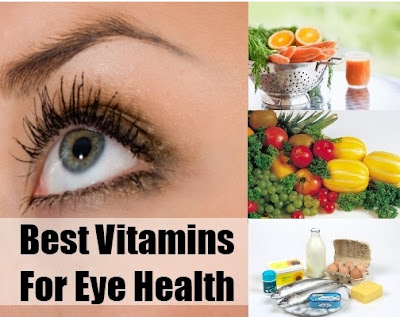
Eye health best vitamins
Best vitamins for Eyes
Food is at the heart of a good health in general, and it is also valid for the sight, to keep a good sight, prefer fruits and vegetables! Why do you tell me

Your retina likes vitamin A


Eat eggs (vitamin A is mostly present in the yolk), veal liver, butter, meat, fish, but also carrots, tomatoes, apricots, spinach, pumpkins, lettuce, peppers, melons ...
Beta-carotene plays an important role in vision because this powerful antioxidant is a precursor of vitamin A. Carotenoids, including beta-carotene, are yellow or orange pigments that give color to fruits and vegetables. So often eat carrots, apricots, sweet potatoes, mangoes, papayas, tomatoes, but also spinach, parsley, broccoli, etc.
The retina is made up of specific cells in the shape of cones and rods, which transform the light into nerve impulses interpreted in images by the brain. Cones (involved in daytime vision) and sticks (night vision) need vitamin A to function.
Vitamin A is therefore essential for daytime and night vision, a good adaptation of the eye to darkness, but also a good irrigation of the eye and to prevent dry eye.

Your retina also likes omega 3

Omega 3s helps to moisturize the eye and prevent dry eyes. They also have a recognized preventative effect on age-related macular degeneration (AMD).
Eat fish two to three times a week while focusing on fatty fish (salmon, herring, mackerel, sardines ...) and use vegetable oils rich in omega-3 (rapeseed, nuts, flax). And limit oils rich in omega-6 such as sunflower oil and red meats, deli meats, fried foods and industrial products (pastries, donuts ...)

Your cornea and crystalline ask for vitamin C

Citrus fruits are particularly rich in vitamin C, as is kiwifruit. But green leafy vegetables (parsley, spinach ...) and cabbages and peppers also bring a lot of vitamin C.
Vitamin C is another antioxidant that helps fight against free radicals, responsible for cellular aging. It protects the cornea and the lens from oxidation and helps prevent cataracts. Note that zinc and vitamin E are also powerful antioxidants beneficial to our visual cells.

Your macula needs Lutein and Zeaxanthin

Lutein and zeaxanthin are also antioxidants belonging to the carotenoid family. They are therefore naturally found in fruits and vegetables of yellow and orange color (carrots, pumpkins, corn, peppers, citrus ...) and green (spinach, cabbage ...).
The macula, the central part of the retina, plays an important role in the vision of details, indispensable for reading, writing, driving, recognizing faces, etc. This area is rich in lutein and zeaxanthin pigments that protect the macula from light-ray damage and neutralize free radicals. Both of these pigments may help prevent cataracts and age-related macular degeneration.

Eat black berries to protect your eyesight

Black currant, blueberries, blackberries. They are rich in anthocyanins, pigments that act as "sunscreen" for cells, protecting them from damage caused by the absorption of blue-green and ultraviolet rays.
The tradition is that blueberries treat venous circulation disorders and certain diseases of the eye, including diabetic retinopathy, glaucoma and cataracts. Many doctors recommend their patients blueberry extracts to improve their eyesight.
Where can I find blueberry extracts? In capsule essentially, very convenient to take, a real concentrate of active ingredients.
Do not wait to start losing eyesight to worry about your eyes. And if you see dark spots or your vision drops, react even faster.
There are two main threats to the eyes: cataracts and age-related macular degeneration, or AMD.
You can also take a daily preventive formulation of blueberry and blackcurrant extracts lutein and zeaxanthin, as well as other protective antioxidants.

Good lighting for your eyes! 
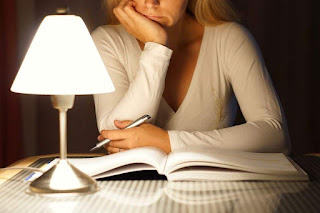
Good lighting for your eyes!

When you read, your eyes must be able to see clearly what they read, under no circumstances force. So good lighting is needed like this:
When you read a book or work closely, the light should be strong enough to properly illuminate the entire surface to which your gaze is directed. The light source should be located, for right-handed people, above your left side, and vice versa for left-handed people. This avoids shading that would obstruct your vision.

The problem of screens

The screens are widespread, and are rather harmful to our eyes and the quality of our view. Clearly we spend too much time with frozen eyes on the screens, and earlier, it is really a major health problem! Our eyes are not made to stand still in front of the screens.
We submit our eyes indeed to great tensions. Thus, we tend to fix our eyes on the screen too much, to focus too much on what interests us. As a result, our hair will not be as regular as usual.
After a while in front of the computer, our eyes may begin to sting, to burn, signs of a loss of hydration of the cornea of the eyes. You may also experience heaviness of eyeballs or even headaches or eyes.
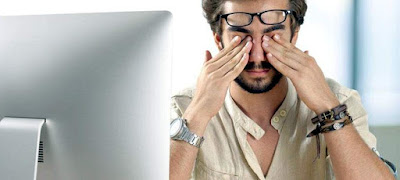
Screen Effect on Eyes

Proposed solutions for screens:

•Take breaks regularly
•Practice a PALMING of at least 5 minutes, to bring you relaxation (for those who spend a lot of time in front of the screens)
•Stop for a moment and look away with interest, not just because it's better to do it, to relieve the tension from close-up .
•Every 15 minutes, close very slowly the eyelids completely and then reopen them immediately afterwards also very slowly (to do at least 10 times), to strengthen the hydration of the cornea of your eyes.

Palming to improve his sight

Among the natural methods to have a good view simply, some are essential, essential. The practice of palms or palming is one of them.
It is a relaxation technique advocated by Dr. William BATES (eminent ophthalmologist, 1860-1931, discoverer of the qualities of normal vision and treatment without sight glasses) to relieve eye strain and to rest his eyes, to restore them radiance, vigor, well-being.

Palming to improve sight

This is the fundamental technique to progress very quickly in the rehabilitation of the eyes.
Who can practice palming?
•Anyone with strabismus, cataracts, glaucoma, keratitis, etc.
•Anyone with a common refractive problem: myopic, presbyopic, hyperopic, astigmatic, etc.
•Anyone experiencing eye strain, even one with excellent eyesight.

How to practice palming?

Sitting or standing: elbows released on a table with something soft underneath (blankets, pillows ...) or on tight knees. The head rests softly, without tension of the muscles of the neck in particular
.
In lying position: elbows resting on the chest or on blankets, the head then resting on a pillow.
•Fix your attention for a few seconds on an object in front of you.
•Heat the palms of your hands first by rubbing them for a few seconds against each other.
•Place the center of each palm of your hand over the open eyes, fingers tight, those with the right hand slightly covering those of the left hand. Your two hands, placed at an angle, appear to form the letter A. Thus arranged, they will avoid the passage of light.
•After verifying the presence of total darkness, close your eyes. Be careful not to press the eyeballs by squeezing your palms or rubbing your eyes with your fingers.
•Rest your mind and your eyes by forgetting them as much as possible.
•With slow, steady breathing, you'll relax quickly and easily.
The goal of palming is relaxation and well-being. It's about perceiving black. Visualize the field of vision, eyes closed, telling you that it is getting darker and darker. By practicing correctly, you will see nothing but black.

Protect your eyes from the sun!

The sun's ultraviolet (UV) rays are essential for the assimilation of vitamin D and are beneficial for the treatment of certain diseases such as eczema, rickets and psoriasis.
However, it is necessary to expose oneself to it in a moderate way because UV is likely to cause cataracts or macular degeneration.
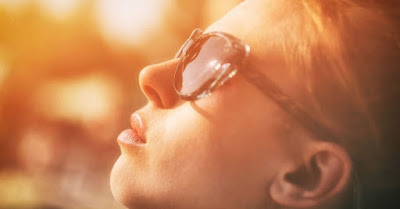
Sun Effects on Eyes
Sun Effects on Eyes

You must protect your eyes when you are outside by avoiding looking towards the sun and wearing sunglasses. These, according to the use that one wishes to make, present a UV protection index on a scale of 0 to 4. Health Canada classifies this type of glasses in three categories: aesthetics, all use and special use. The protection rate of sunglasses ranges from 60 to 98.5% against UVA and from 87.5 to 99% against UVB.

You will have understood, your sight deserves that you linger there a little, because your eyes are not only the reflection of your soul, but also a much solicited sense which one must take care! Just change some habits and complement each other to find, keep or have a good view, simply.


10 commandments for the care of your eyes

What are the important ten Commandments Of Eye health and Care 

Ten Commandments for eyes
The care of the eyes and the visual health are one of the main decisions to preserve the well-being. The start of a new year is an excellent opportunity to review ten priority factors in this preventive task. We count on the knowledge and experience of Dr. Elena Barraquer. This is your decalogue

Dr. Elena Barraquer
Dr. Elena Barraquer graduated in Medicine and Surgery from the Autonomous University of Barcelona in 1977 and continued her training in the United States, with a research grant from the National Eye Institute (Bethesda, Maryland).
He continued his curriculum as a Fellow in the Eye Pathology Laboratory at the Wilmer Eye Institute (Baltimore), as a resident of Internal Medicine at Sinai Hospital in Baltimore, and from 1984 to 1987 he trained as a resident physician in Ophthalmology at the Massachusetts Eye & Ear Infirmary (Boston).
He then did a Cornea Fellow for two years at the Bascom Palmer Eye Institute (Miami), and settled in Turin (Italy) at the end of 1989.
She returned to Barcelona in 2002 and assumed the position of Deputy Medical Director of the Barraquer Ophthalmology Center . In his clinical practice, his work area focuses on the anterior segment of the eyeand is a specialist in cataract surgery.
Since 2003, she has been the Executive Director of the Barraquer Foundation, leading medical missions to offer ophthalmological care to people in need around the world.

Dr. Elena Barraquer Ten Commandments
Dr. Elena Barraquer Ten Commandments for the care of your eyes

Ten Commandments for the care of your eyes

1.- Annual ophthalmological review to detect any ocular problems and ametropias (myopia, astigmatism and hyperopia) as soon as possible. The macular degeneration and glaucoma, among other diseases, have a better prognosis if detected and treated early. Uncorrected refractive errors produce a visual effort with difficulty to focus, eye fatigue and headaches.

2.- A healthy diet is necessary to maintain a good visual function. Vitamins A, C and E, minerals such as zinc and selenium, pigments such as lutein and zeaxanthin and Omega 3 acids, are essential for the retina and to delay the aging of ocular structures. These substances are found in vegetables, fruits, fatty fish, seafood and nuts.

3.- Vitamins and mineral supplements should complement the diet in cases of patients or elderly people who do not have an adequate diet and in patients with ophthalmological pathologies that require a higher intake of them.

4.- The ocular surface remains transparent thanks to the lubrication of the tear film. When we blinked we covered the eye with that film. When we fix the view either on the computer, the television or a book, we reduce the frequency and amplitude of the flicker. This causes ocular dryness with the appearance of discomfort such as redness, pain and lacrimation by reflex. To avoid them, it is advisable to use artificial tears both on these occasions and in adverse environmental situations (heating, air conditioning, smoke, etc.)

5.- Ultraviolet radiation  produces acute and chronic alterations in all structures of the eye. It is essential to shield them, even on cloudy days, after approved sunglasses with guaranteed protection (filter against UV).
Dr. Elena Barraquer / Photo provided by the Barraquer Ophthalmology Center

6.- Practice the sport with the appropriate glasses . This will not only protect the eyeballs from solar radiation but also from possible injuries and damage caused by environmental factors such as wind, dust and sand.

7.- If there is an ocular contaminationby a foreign body or a chemical substance, it is advisable to wash it immediately with plenty of clean water before going to the ophthalmologist. They should never rub their eyes.

8.- Good lighting is essential to reduce visual fatigue. To read we must place the light source behind us and focused on the book. When working with the computer or watching television, light reflections should be avoided on the screen.

9.- Relaxing the ocular structuresresponsible for the accommodation (focus) also reduces the visual stress of a task maintained for a long time. To do this, we recommend that you remove the view of the focused object (screen, book), every 15-20 minutes, for about 10-15 seconds.

10.- Educate the children and make society aware of the necessary measures to take care of the eyes, those organs that allow us to discover and enjoy the wonders that surround us.

Bad Effects and Disadvantages of Contact Lenses

Side Effects and Disadvantages of Wearing Contact Lenses and How to Prevent Them

Surely contact lenses have helped many people to improve, not only the view, but the security and confidence in themselves. However, excessive use, or directly misuse, can take its toll in the form of infectious ulcerative keratitis. Avoid it

Disadvantages of Contact Lenses
Since the 80s, the use of contact lenses has become a very important risk factor for suffering an infectious ulcerative keratitis, an inflammation of the cornea that can have complicated consequences.

The increase in the number of contact lens users in young people highlights the social impact that these conditions can have.


Dr. Hernán Martínez Osorio, a specialist at the Barraquer Ophthalmology Center, knows these risks well and EFEsalud has spoken with him to launch a message of prevention against the use and misuse of contact lenses.

The incidence of infectious keratitis ranges from 2 per 10,000 users of soft contact lenses (LCB) to 25 per 10,000 LCB users of silicone hydrogel for night use.

The risk of suffering an infectious keratitis is three times higher in LCB users of daily use compared to LC Rigid gas permeable: the risk is increased five times if they are used during the night.

The users of daily replacement LCB, explains this ophthalmologist, have a risk up to three times greater according to the rigidity and type of LCB; finally LCB users of silicone hydrogel have a risk between three and five times higher depending on their night use.

"If these infections are not diagnosed in time," warns this doctor, "the patient may end up with a cornea transplant or losing his sight."
Wearing Contact Lenses
Disadvantages of Contact Lenses

Other risk factors

But the use of contact lenses presents other important risk factors. For example, the hygiene of the case, the type and cleaning solution used and the habits of use such as bathing or swimming with contact lenses and hand washing; Smoking, low income and the acquisition of glasses on the Internet are also listed as elements that increase risk.
Dr. Martínez Osorio warns of a factor that has produced in Spain in the last year fungal keratitis; it refers to the white marks of certain cleaning solutions that are sold in optical stores and supermarkets. "The white marks do not have the same quality control and antiseptics enough to kill the fungi that can grow in the cases," he says.
It also sends a warning message about the infections of a very dangerous parasite, the acanthamoeba, which can produce very severe and aggressive infections, difficult to eradicate, much worse than the effects of a fungus or bacteria.


Precautions and cautions


Dr. Martinez Osorio does not hesitate to advise that the first precaution is to follow the recommendations of the manufacturers. "The lenses are made to be used as prescribed, weekly, biweekly, monthly, yearly ... but with proper cleaning and precise hygiene recommendations, such as always washing your hands," he recalls.

He also points out that with lenses you should never bathe in the pool or in the sea, and never wash them with tap water.
Disadvantages of Contact Lenses

Wearing Contact Lenses

And how many hours can you carry in your eyes? Do not doubt in the answer: The least possible. "That nobody gets used to 16 hours a day, the fewer hours the better; and if there is intolerance restrict or cancel its use. The less you use more years you can enjoy them, "he says.

Another clear recommendation: do not sleep with them. And also avoid colored lenses, which were fashionable, but now much less.